Communication
Nodes, topics, services and actions
Define interfaces, QoS, namespaces, lifecycle nodes and composition based on latency and reliability requirements.
 Yokaï Robotics
Mobile robotics engineering
Discuss your project
Yokaï Robotics
Mobile robotics engineering
Discuss your project
ROS 2
We design, develop and improve the reliability of ROS 2 architectures for mobile robots. From the first node graph to deployment on embedded computers, each component supports measurable field behavior.
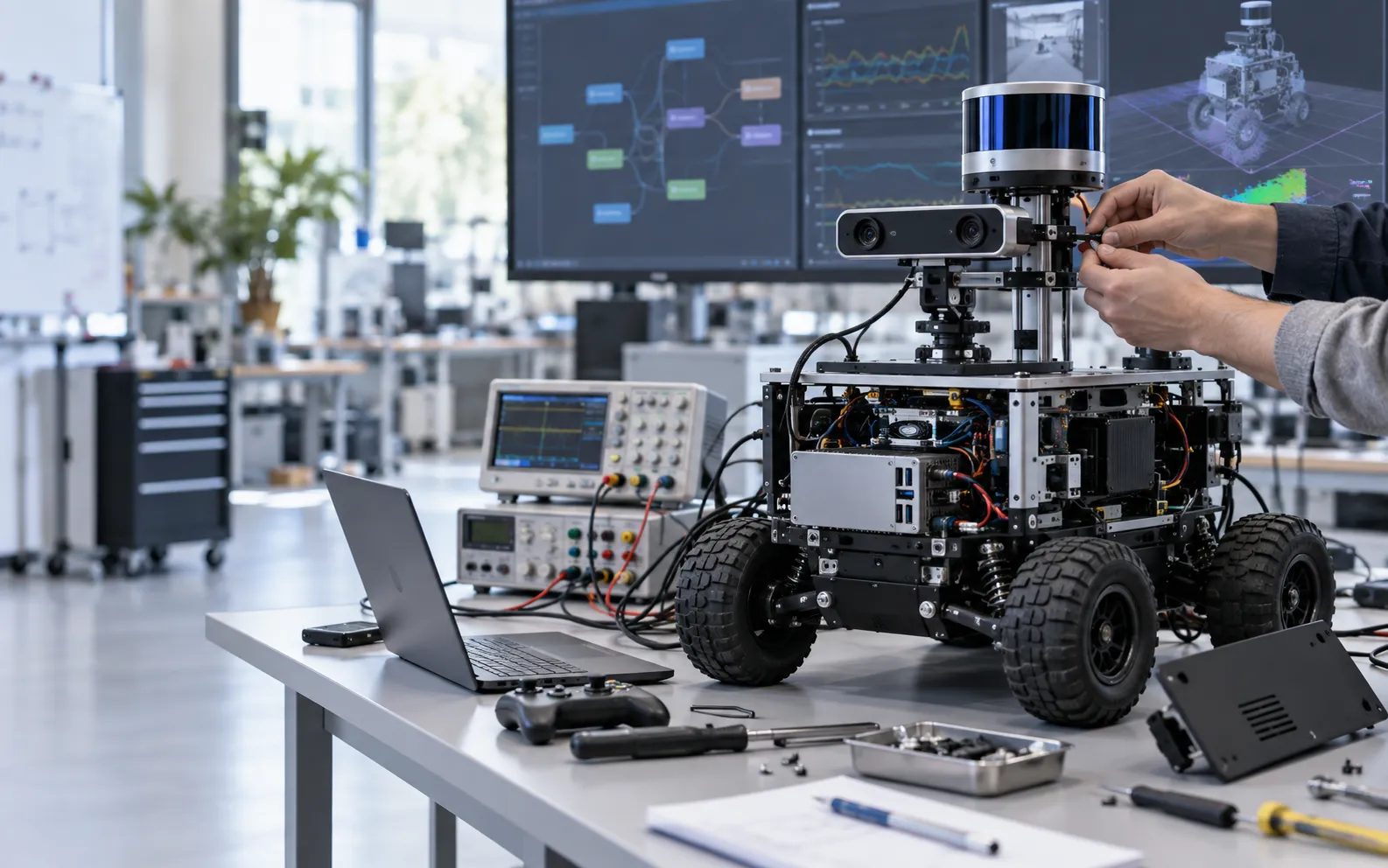
ROS 2 architecture
Communication
Define interfaces, QoS, namespaces, lifecycle nodes and composition based on latency and reliability requirements.
Coordinate frames
Kinematic modeling, consistent frames, transforms, calibration and RViz visualization.
Hardware
Integrate sensors, actuators and controllers through CAN, serial, Ethernet or proprietary protocols.
Autonomy
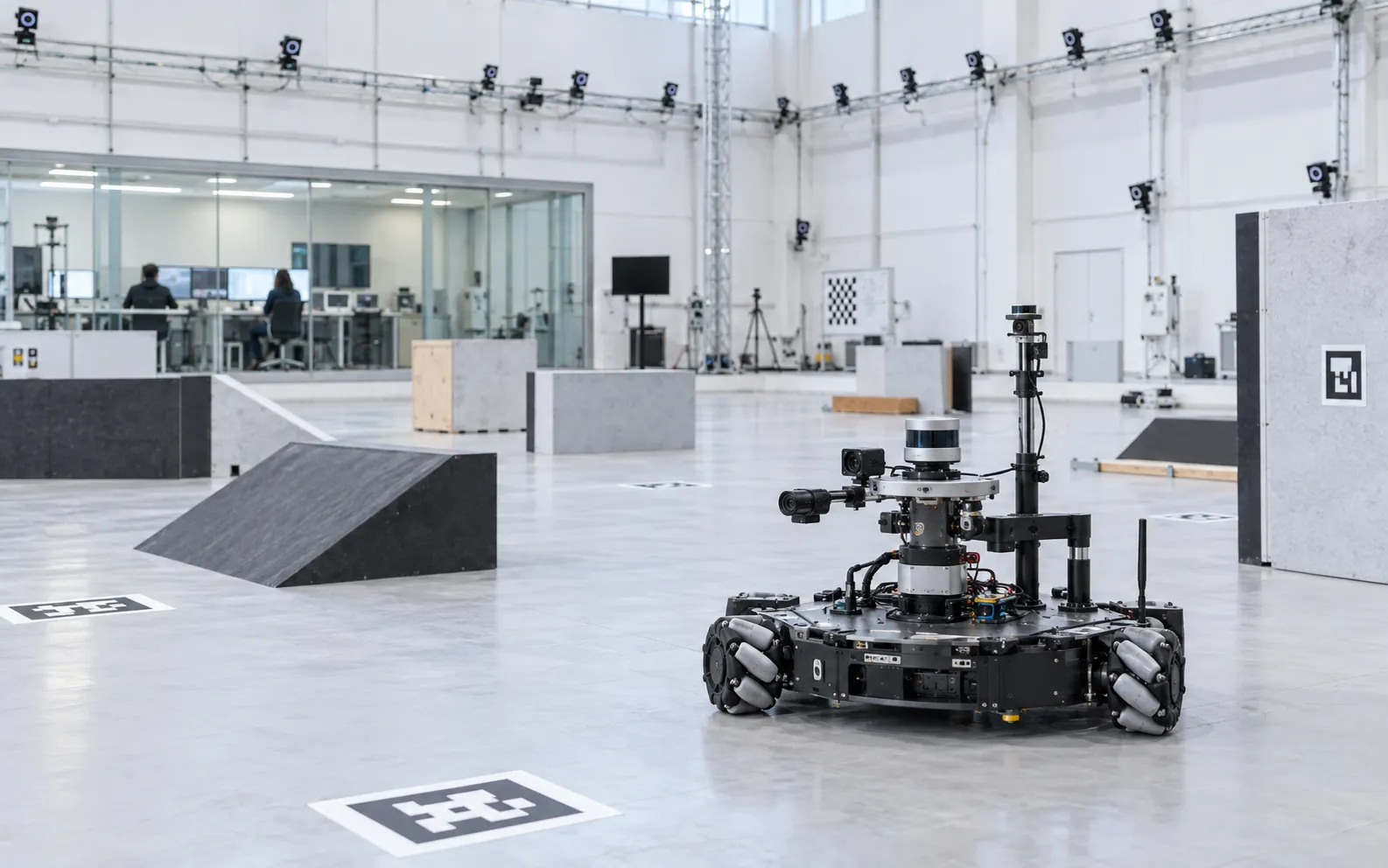
Production readiness
URDF models, Gazebo worlds and reproducible scenarios enable development before the hardware is complete.
Rosbags, integration tests, latency measurements, diagnostics and validation under normal or degraded conditions.
Containerization, launch files, configuration, monitoring, automatic startup and operating documentation.
Modernization
We identify packages to port, dependencies to replace, interfaces to stabilize and expected benefits. Migration is staged to preserve critical functions and make testing reproducible.
FAQ
The choice depends on the product lifecycle, operating system, drivers and dependencies. An LTS release is generally preferred for robots intended for field use.
Yes, after validating kinematics, odometry, TF transforms, sensors and navigation requirements.
Yes, provided a usable interface exists or can be developed. We handle integration, calibration and data evaluation.
Yes. Analysis covers interfaces, QoS, TF, CPU and memory resources, message rates, logs and failure reproducibility.
Project
Describe the robot, existing packages and expected behavior.