Differential drive
Simple, robust architecture for platforms with two or four driven wheels.
 Yokaï Robotics
Mobile robotics engineering
Discuss your project
Yokaï Robotics
Mobile robotics engineering
Discuss your project
Robotics mechanics
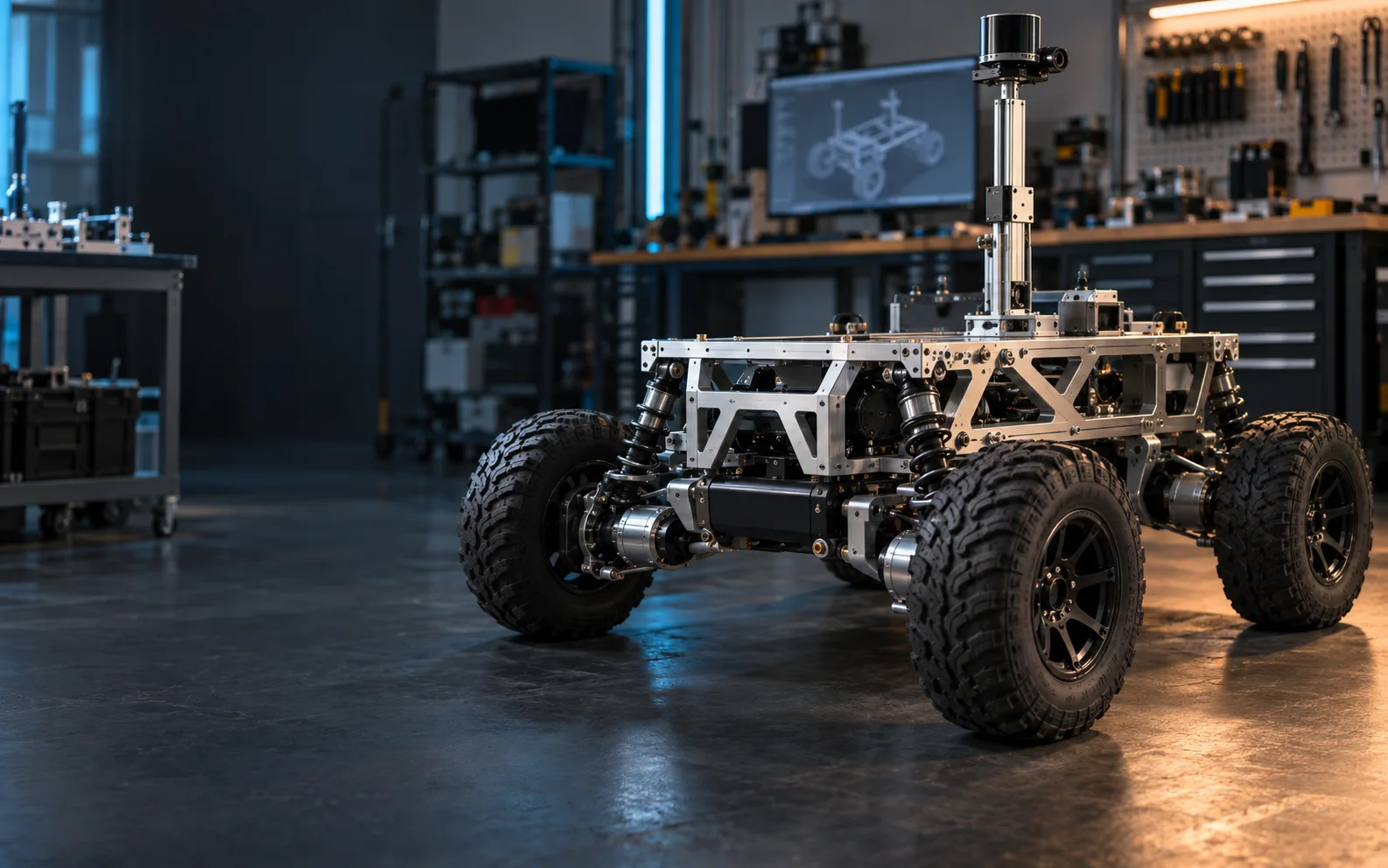
We design the structure supporting the robot’s performance: chassis, locomotion, transmission, component placement and sensor integration.
Mechanical architecture
Locomotion
Simple, robust architecture for platforms with two or four driven wheels.
Mecanum or omni wheels when lateral maneuverability is critical.
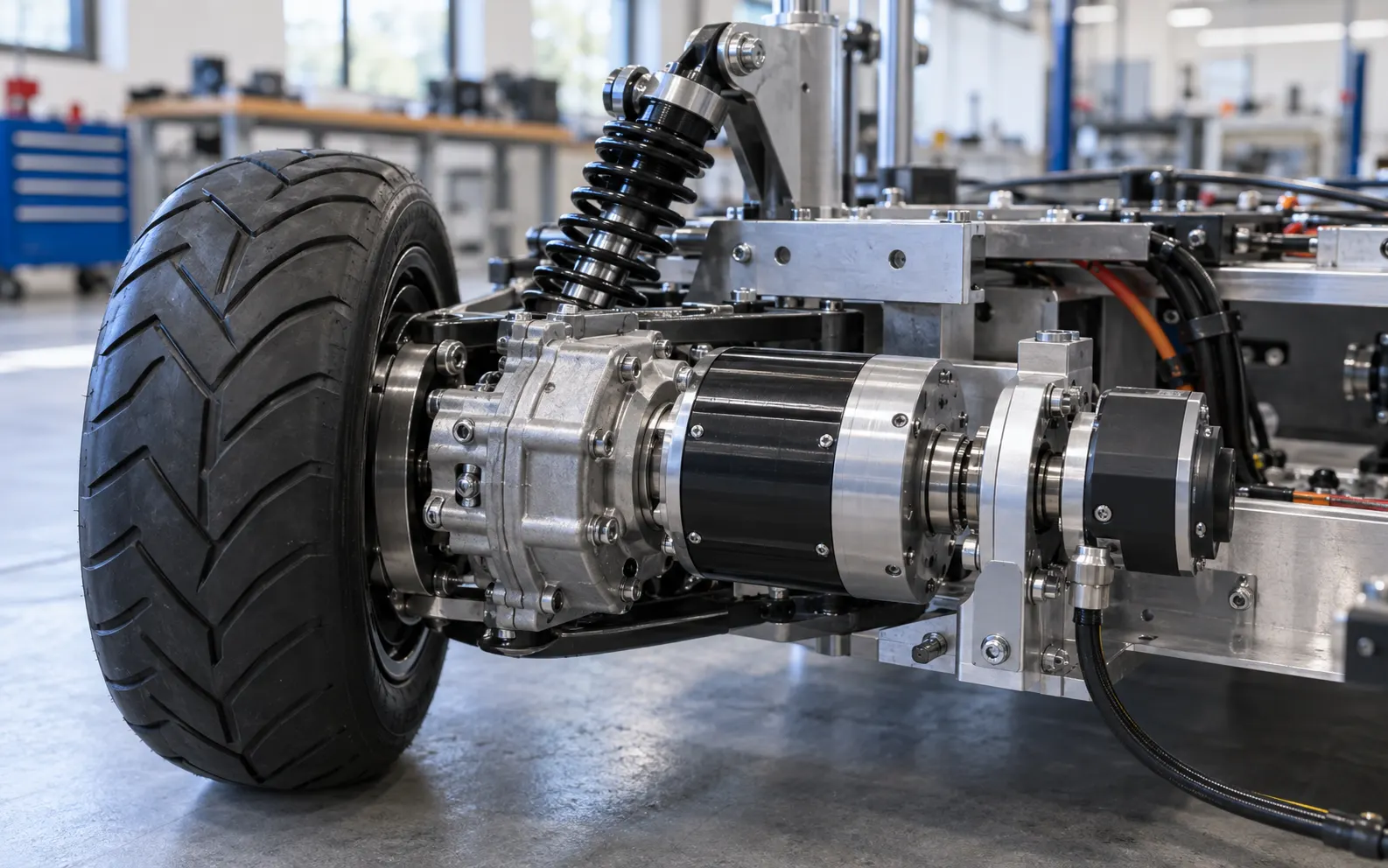
Wheels, suspension, torque and gearing adapted to uneven ground and payload.
Sensors
Field of view, occlusion, vibration, rigidity and geometric frames directly affect localization and perception. Mechanical integration is designed together with ROS 2 architecture and calibration.
Prototype
FAQ
Yes. We can adapt a mobile base, add sensor mounts or revise the layout to integrate electronics and payload.
Based on mass, slope, speed, wheel diameter, transmission efficiency, ground conditions and target runtime.
Yes. Backlash, slip, vibration and sensor placement affect robot odometry, perception and control.
Project
Describe the expected payload, terrain, speed and runtime.